Buckwheat
Fagopyrum esculentum
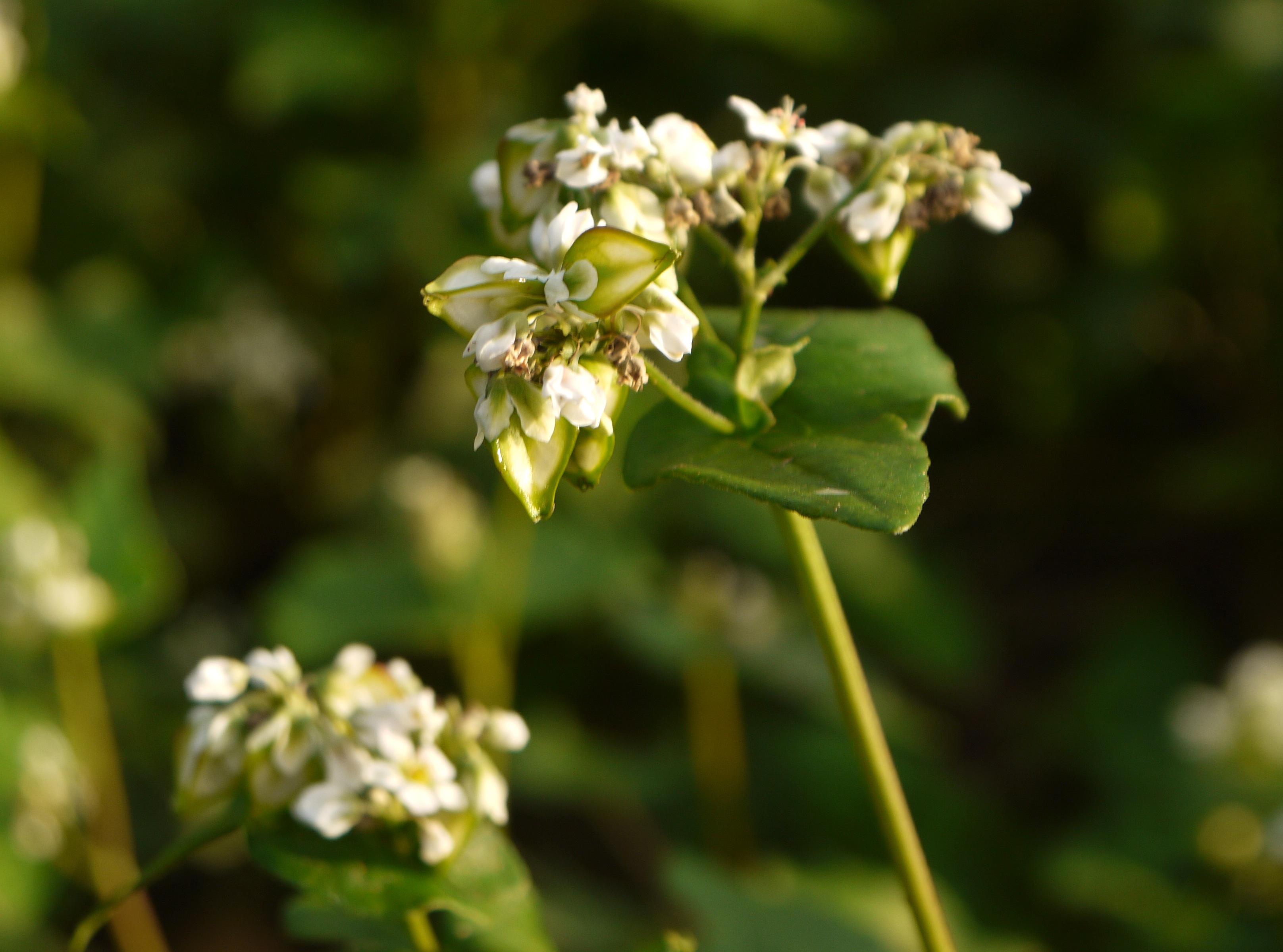
Not a wheat and not a grass — a knotweed relative. Groats for kasha; flour for soba. Fast cover crop that can be a grain if you beat the frost.
GROW → HARVEST → EAT → DRY → POWDER → CAPSULE → GUMMY — forms are not equivalent. Food first.
Identity
What it is
Not a wheat and not a grass — a knotweed relative. Groats for kasha; flour for soba. Fast cover crop that can be a grain if you beat the frost.
Edible portions
- seeds (groats)
Absence of a portion from this list means it is not treated as food here — not that every other part is toxic.
Growing
- Climate. Short-season annual
- Light. Full sun
- Soil. Modest fertility; too-rich = lush, little seed
- Planting. Direct-sow after frost. 30–40 days to bloom.
- Harvest. When most seeds are hard; some will still be green (indeterminate).
Preparation and culinary uses
- Toasted groats (kasha)
- Soba noodles
- Pancakes
Nutrition and compounds
- Minerals (qualitative). magnesium, manganese — look up current USDA FoodData Central entries for numbers.
AAA interpretation Food first. These associations explain why a plant shows up in a nutrient conversation — they are not a supplement shopping list.
Safety
- Not wheat; still a known allergen for some people. Do not assume gluten-free products are buckwheat-safe or vice versa without labels.
Next steps
Sources
- USDA PLANTS Database — taxonomy and range (verify current entries)
- USDA FoodData Central — nutrient profiles for foods (verify current entries; this page does not invent milligrams)
- State cooperative extension growing guides — verify for your region
Honest incompleteness is preferred to fabricated completeness. If a section is missing, no record for it is attached here — not a claim that the plant lacks that characteristic, and not that it was omitted as a secret.
Internal quality class A. Strong page: distinctive plant facts plus practical growing or kitchen use.