Catnip
Nepeta cataria
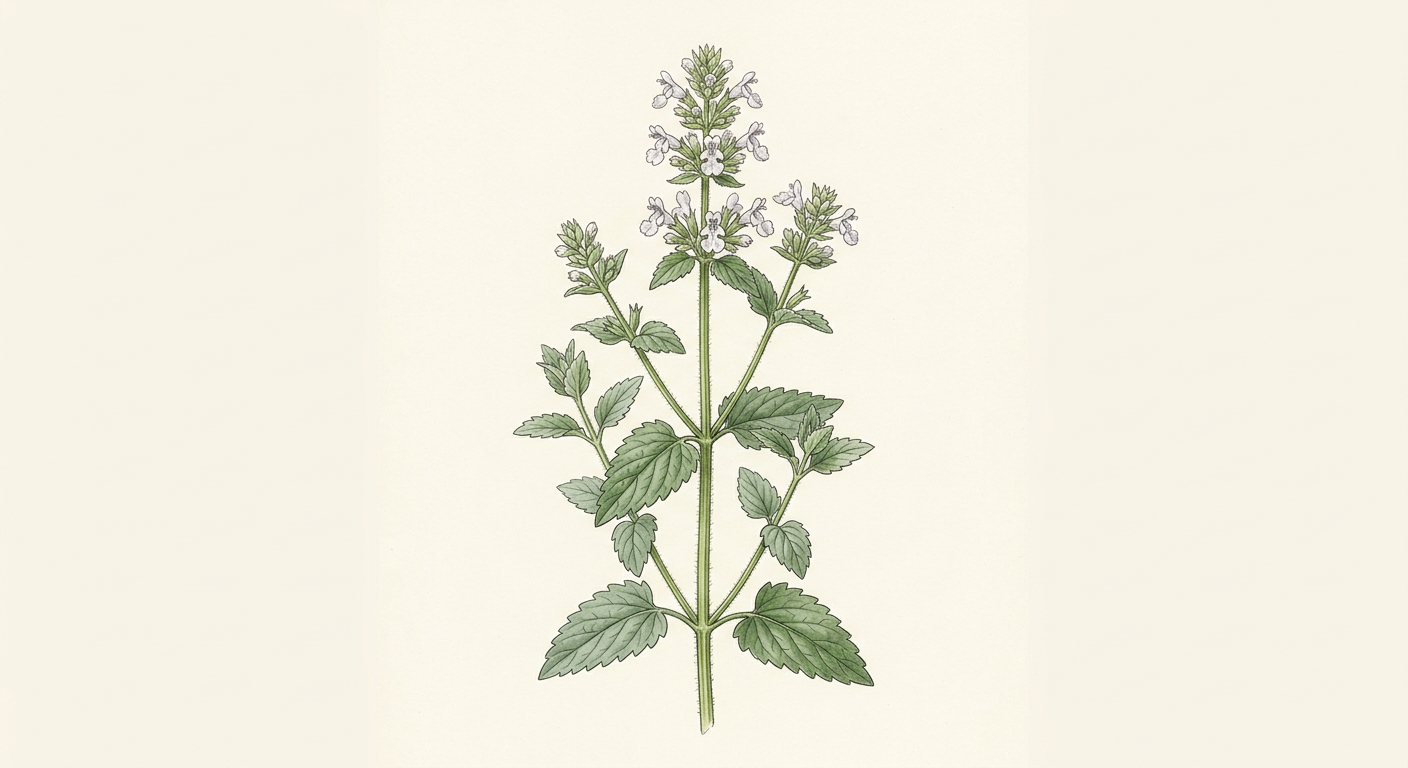
A weedy mint whose nepetalactone delights many domestic cats. Humans historically used the leaves as a mild lemony tea; it is not catmint (Nepeta × faassenii), the garden edging plant.
GROW → HARVEST → EAT → DRY → POWDER → CAPSULE → GUMMY — forms are not equivalent. Food first.
Identity
Also called: catmint (loosely, but see Nepeta × faassenii)
What it is
A weedy mint whose nepetalactone delights many domestic cats. Humans historically used the leaves as a mild lemony tea; it is not catmint (Nepeta × faassenii), the garden edging plant.
From the existing encyclopedia
Catnip shows up in regional spice blends, apothecary tea chests, and slow-cooked pots where aroma matters as much as flavor. Store in a cool, dark cupboard in an airtight jar; label with purchase date. Balances with honey or dates in warm drinks when used as food sweetening. When substituting dried Catnip for fresh, use about one-third the volume and bloom in fat or hot water before adding acid or dairy.
Edible portions
- leaves as tea herb
Absence of a portion from this list means it is not treated as food here — not that every other part is toxic.
Growing
- Climate. 3–9
- Light. Full sun to light shade
- Soil. Well-drained; thrives on neglect
- Planting. Easy from seed; cut back after bloom to reduce self-sowing.
- Harvest. Leafy tips as flower buds form.
Preparation and culinary uses
- Mild mint-lemon infusion
Nutrition and compounds
- Plant compounds. nepetalactone. Presence is not a dose, a cure, or a reason to buy a capsule.
AAA interpretation Food first. These associations explain why a plant shows up in a nutrient conversation — they are not a supplement shopping list.
Next steps
Sources
- USDA PLANTS Database — taxonomy and range (verify current entries)
- USDA FoodData Central — nutrient profiles for foods (verify current entries; this page does not invent milligrams)
- State cooperative extension growing guides — verify for your region
- Integrated from the existing aaaLifetime / quantum-biohack encyclopedia corpus (unique text preserved where it was not boilerplate).
Honest incompleteness is preferred to fabricated completeness. If a section is missing, no record for it is attached here — not a claim that the plant lacks that characteristic, and not that it was omitted as a secret.
Internal quality class A. Strong page: distinctive plant facts plus practical growing or kitchen use.