Cayenne
Capsicum annuum
A hot, thin-fleshed chili cultivar group of the same species as bell pepper. Heat lives in placental ribs. Dried powder is a processed form of the fruit — not a different plant.
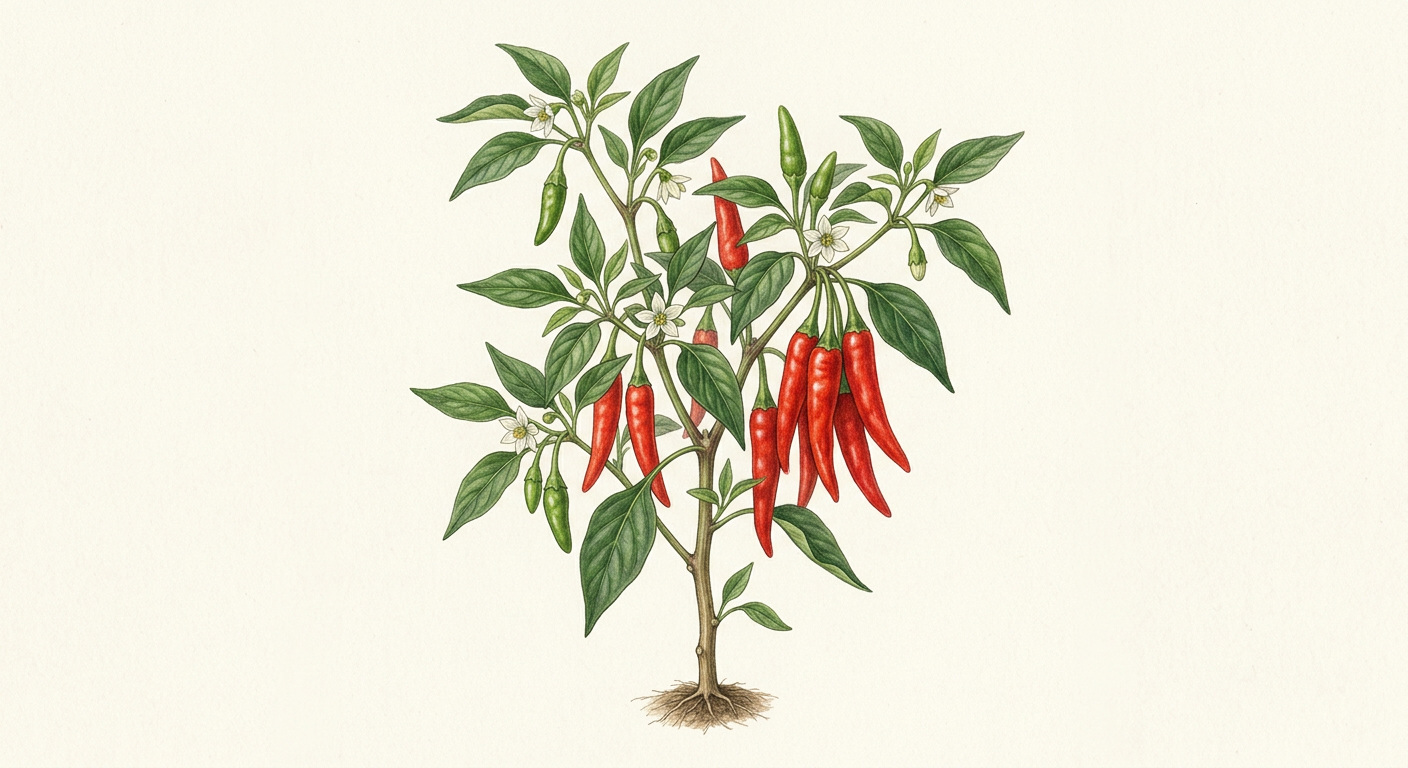
GROW → HARVEST → EAT → DRY → POWDER → CAPSULE → GUMMY — forms are not equivalent. Food first.
Identity
Also called: cayenne pepper
What it is
A hot, thin-fleshed chili cultivar group of the same species as bell pepper. Heat lives in placental ribs. Dried powder is a processed form of the fruit — not a different plant.
From the existing encyclopedia
Meal planners keep Chili Peppers on hand because it pairs with multiple herbs in the aaaLifetime encyclopedia. Heat varies by cultivar; add toward the end of cooking. Introduce new ingredients gradually in cooking portions to learn flavor strength before scaling recipes. Works alongside green tea or ginger in everyday beverage rotation. Rotate Chili Peppers with other staples in weekly meal plans so pantry kits stay versatile without repeating the same flavor profile every day.
Edible portions
- fruit
Absence of a portion from this list means it is not treated as food here — not that every other part is toxic.
Growing
- Climate. Annual in frost climates; perennial in tropics
- Light. Full sun, heat
- Soil. Warm, well-drained, moderate fertility
- Planting. Start indoors 8 weeks before last frost; transplant to heat.
- Harvest. Red, fully colored fruits for drying; green if you want less ripe heat.
Processing, drying, storage
- Drying. String whole fruits or dehydrate split pods until brittle. See also Make → Drying.
Preparation and culinary uses
- Dried flakes and powder in savory cooking
- Fresh in sauces
Nutrition and compounds
- Plant compounds. capsaicin. Presence is not a dose, a cure, or a reason to buy a capsule.
AAA interpretation Food first. These associations explain why a plant shows up in a nutrient conversation — they are not a supplement shopping list.
Safety
- Do not touch eyes after handling. Capsaicin is an irritant, not a nutrient.
- Same species as bell pepper — heat is cultivar, not a separate genus.
Next steps
Sources
- USDA PLANTS Database — taxonomy and range (verify current entries)
- USDA FoodData Central — nutrient profiles for foods (verify current entries; this page does not invent milligrams)
- State cooperative extension growing guides — verify for your region
- Integrated from the existing aaaLifetime / quantum-biohack encyclopedia corpus (unique text preserved where it was not boilerplate).
Honest incompleteness is preferred to fabricated completeness. If a section is missing, no record for it is attached here — not a claim that the plant lacks that characteristic, and not that it was omitted as a secret.
Internal quality class A. Strong page: distinctive plant facts plus practical growing or kitchen use.