Chanterelle
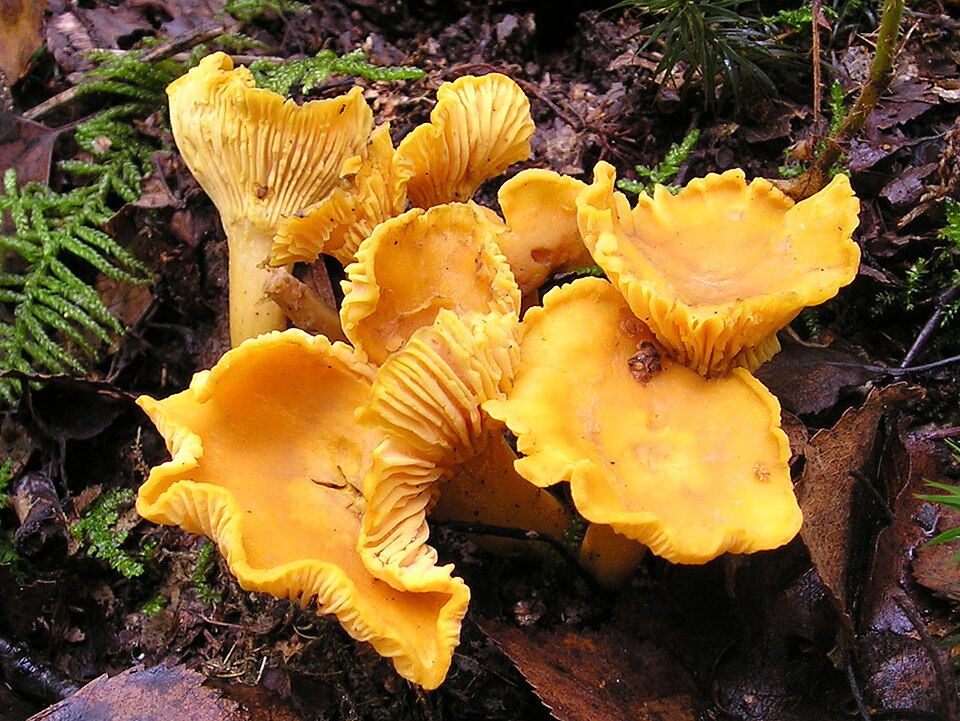
Cantharellus cibarius
Wild mycorrhizal mushroom with ridges, not true knife-sharp gills. Jack-o’-lantern (Omphalotus) is a toxic look-alike with true gills and orange flesh.
GROW → HARVEST → EAT → DRY → POWDER → CAPSULE → GUMMY — forms are not equivalent. Food first.
Identity
What it is
Wild mycorrhizal mushroom with ridges, not true knife-sharp gills. Jack-o’-lantern (Omphalotus) is a toxic look-alike with true gills and orange flesh.
Edible portions
- cooked fruiting bodies, correctly identified
Absence of a portion from this list means it is not treated as food here — not that every other part is toxic.
Growing
- Climate. Wild forests, summer–fall depending on region
- Light. Forest
- Soil. n/a
- Planting. Not a backyard log crop like shiitake.
- Harvest. Pinch; leave immature. Cook.
Preparation and culinary uses
- Dry-sauté first to drive water, then fat
Safety
- Omphalotus jack-o’-lantern is the classic toxic confusion. Ridges vs gills, white vs orange flesh, growth on wood vs ground — learn them. No photo on this site is a foraging license.
Next steps
Sources
- USDA PLANTS Database — taxonomy and range (verify current entries)
- No USDA FoodData Central nutrient profile is attached here. That is not a claim that the plant contains no nutrients.
- State cooperative extension growing guides — verify for your region
Honest incompleteness is preferred to fabricated completeness. If a section is missing, no record for it is attached here — not a claim that the plant lacks that characteristic, and not that it was omitted as a secret.
Internal quality class A. Strong page: distinctive plant facts plus practical growing or kitchen use.