Comfrey
Symphytum officinale
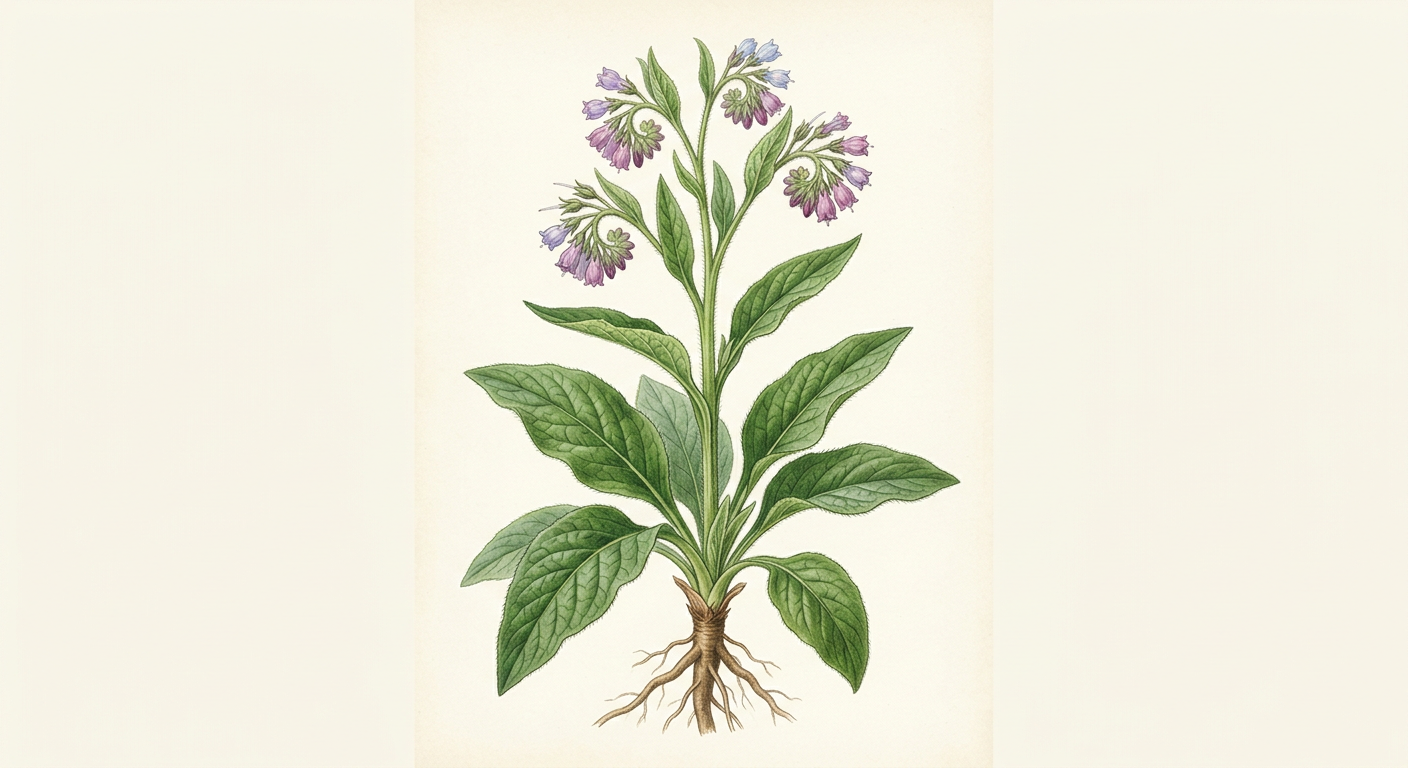
Broad, hairy leaves and coiled flower cymes. Traditional poultices were external. Internal use is discouraged in modern assessments because of pyrrolizidine alkaloids that stress the liver.
GROW → HARVEST → EAT → DRY → POWDER → CAPSULE → GUMMY — forms are not equivalent. Food first.
Identity
Also called: knitbone
What it is
Broad, hairy leaves and coiled flower cymes. Traditional poultices were external. Internal use is discouraged in modern assessments because of pyrrolizidine alkaloids that stress the liver.
Identification
Large lance leaves with winged stems; pink to purple bells.
From the existing encyclopedia
Comfrey leaf and root contain pyrrolizidine alkaloids that stress the liver when taken internally in modern assessments. Externally, comfrey poultices were traditional for sprains. Internal comfrey products are excluded from v1 catalog. If you discuss comfrey, emphasize external-only historical use and liver caution. Dried leaf may still appear in cosmetic herb listings elsewhere, not our ingestible kits.
Edible portions
Safety Not treated as food on this site.
Growing
- Climate. 4–9
- Light. Part shade to sun
- Soil. Moist, rich — almost too easy
- Planting. Root pieces establish forever; contain it.
- Harvest. Leaves for compost tea or mulch, not for tea cups.
Traditional uses
Traditional use External folk poultice — traditional, not a safety clearance
AAA interpretation Traditional use is not automatically evidence, and evidence is not automatically a shopping recommendation.
Safety
- Internal use discouraged due to pyrrolizidine alkaloids. Historical external poultices are traditional use, not a DIY medical protocol. Do not sell or serve comfrey as an ingestible.
- Internal use discouraged due to liver alkaloids; external history only.
Next steps
Sources
- USDA PLANTS Database — taxonomy and range (verify current entries)
- No USDA FoodData Central nutrient profile is attached here. That is not a claim that the plant contains no nutrients.
- State cooperative extension growing guides — verify for your region
- Integrated from the existing aaaLifetime / quantum-biohack encyclopedia corpus (unique text preserved where it was not boilerplate).
Honest incompleteness is preferred to fabricated completeness. If a section is missing, no record for it is attached here — not a claim that the plant lacks that characteristic, and not that it was omitted as a secret.
Internal quality class A. Strong page: distinctive plant facts plus practical growing or kitchen use.