Mangosteen
Garcinia mangostana
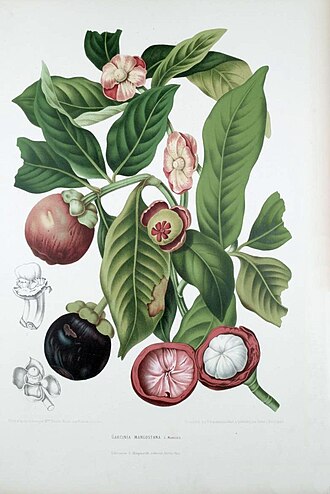
A slow tropical evergreen. White segments inside a thick purple rind. Not related to mango. ‘Garcinia’ supplement products are often a different species (G. gummi-gutta) — do not confuse the fruit with a weight-loss capsule.
GROW → HARVEST → EAT → DRY → POWDER → CAPSULE → GUMMY — forms are not equivalent. Food first.
Identity
What it is
A slow tropical evergreen. White segments inside a thick purple rind. Not related to mango. ‘Garcinia’ supplement products are often a different species (G. gummi-gutta) — do not confuse the fruit with a weight-loss capsule.
Edible portions
- aril segments
Absence of a portion from this list means it is not treated as food here — not that every other part is toxic.
Growing
- Climate. 10–12 ultra-tropical
- Light. Humid tropical shade-to-sun
- Soil. Well-drained, acid, organic
- Planting. Fussy, slow tree. Not temperate.
- Harvest. When the rind colors and the fruit yields slightly.
Preparation and culinary uses
- Fresh
Safety
- The fruit is food. Hydroxycitric-acid weight-loss supplements are a different Garcinia product and not this dessert.
Next steps
Sources
- USDA PLANTS Database — taxonomy and range (verify current entries)
- No USDA FoodData Central nutrient profile is attached here. That is not a claim that the plant contains no nutrients.
- State cooperative extension growing guides — verify for your region
Honest incompleteness is preferred to fabricated completeness. If a section is missing, no record for it is attached here — not a claim that the plant lacks that characteristic, and not that it was omitted as a secret.
Internal quality class A. Strong page: distinctive plant facts plus practical growing or kitchen use.