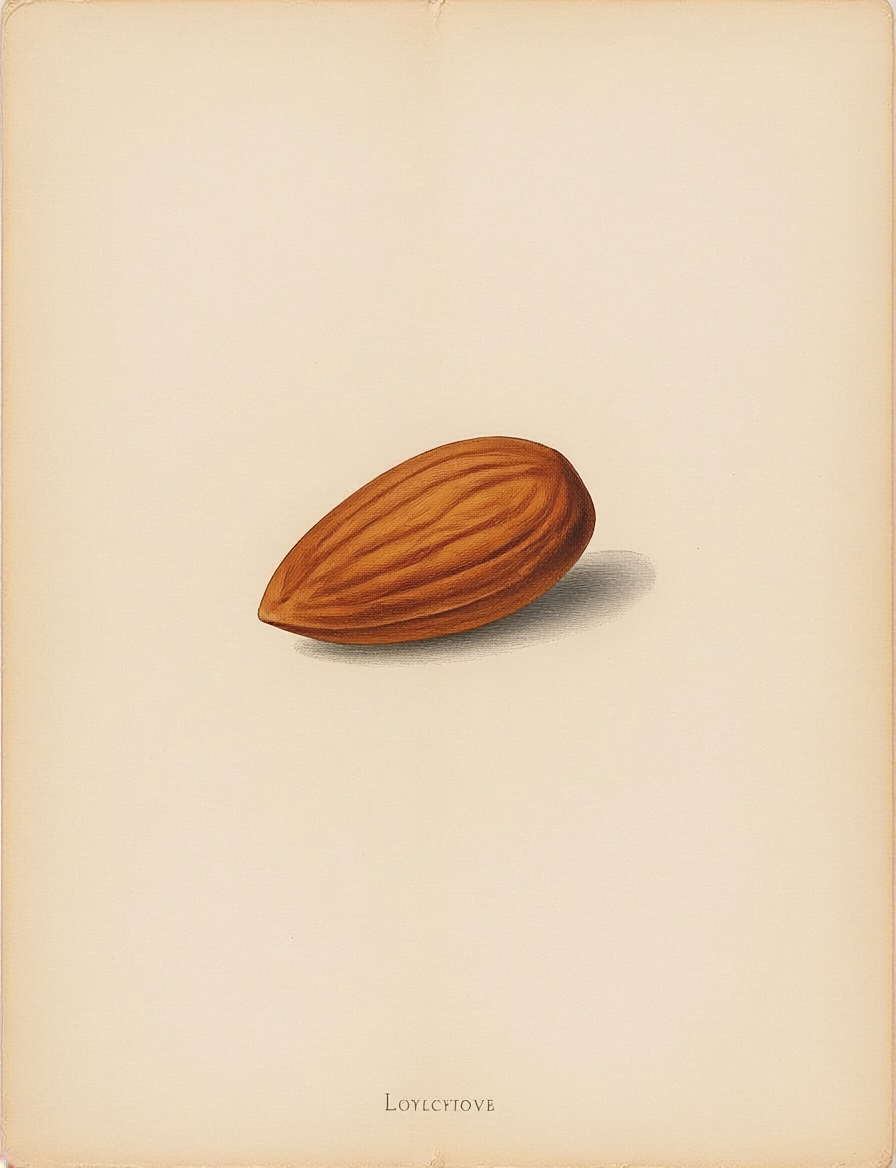
Almond
Prunus dulcis
A stone-fruit relative eaten for the seed. Sweet almonds are food; bitter almonds are high in cyanogenic glycosides and are a flavoring/regulated issue, not a snack. Tree-nut allergen. Encyclopedia custom text on freezer storage is practical.
GROW → HARVEST → EAT → DRY → POWDER → CAPSULE → GUMMY — forms are not equivalent. Food first.
Identity
Also called: almonds
What it is
A stone-fruit relative eaten for the seed. Sweet almonds are food; bitter almonds are high in cyanogenic glycosides and are a flavoring/regulated issue, not a snack. Tree-nut allergen. Encyclopedia custom text on freezer storage is practical.
From the existing encyclopedia
Almonds are tree nuts eaten raw, roasted, or as almond meal in gluten-free baking. They supply plant protein, vitamin E, and monounsaturated fats in everyday portions. Store shelled almonds in the freezer to delay rancidity of their oils. Slice or sliver for salads; use meal in crusts. Note tree-nut allergen labeling if you ever kit almonds for sale.
Edible portions
- sweet seeds
Absence of a portion from this list means it is not treated as food here — not that every other part is toxic.
Growing
- Climate. 7–9 with chill hours and dry summers (California-type climates)
- Light. Full sun
- Soil. Well-drained
- Planting. Most need a pollenizer. Frost on bloom kills crops.
- Harvest. When hulls split; dry immediately.
Processing, drying, storage
- Storage. Freeze shelled nuts to delay rancidity of the oils. See also Make → Storage.
Preparation and culinary uses
- Raw/roasted, almond meal, milk (a process)
Nutrition and compounds
- Vitamins (qualitative, well-known associations). vitamin E — not milligram values.
- Minerals (qualitative). magnesium, protein — look up current USDA FoodData Central entries for numbers.
AAA interpretation Food first. These associations explain why a plant shows up in a nutrient conversation — they are not a supplement shopping list.
Safety
- Bitter almonds are not sweet-almond snacks.
Next steps
Sources
- USDA PLANTS Database — taxonomy and range (verify current entries)
- USDA FoodData Central — nutrient profiles for foods (verify current entries; this page does not invent milligrams)
- State cooperative extension growing guides — verify for your region
- Integrated from the existing aaaLifetime / quantum-biohack encyclopedia corpus (unique text preserved where it was not boilerplate).
Honest incompleteness is preferred to fabricated completeness. If a section is missing, no record for it is attached here — not a claim that the plant lacks that characteristic, and not that it was omitted as a secret.
Internal quality class A. Strong page: distinctive plant facts plus practical growing or kitchen use.