Black locust
Robinia pseudoacacia
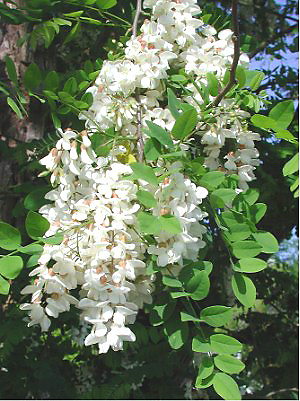
Fragrant white pea-flowers; some traditions fry the flowers. Bark and seeds have toxic reputation. Invasive in some regions. Not honey locust.
GROW → HARVEST → EAT → DRY → POWDER → CAPSULE → GUMMY — forms are not equivalent. Food first.
Identity
What it is
Fragrant white pea-flowers; some traditions fry the flowers. Bark and seeds have toxic reputation. Invasive in some regions. Not honey locust.
Edible portions
- flowers in some traditional fritters — not seeds/bark
Absence of a portion from this list means it is not treated as food here — not that every other part is toxic.
Growing
- Climate. 4–8
- Light. Full sun
- Soil. Tough, nitrogen-fixing
- Planting. Thorny, suckering, weedy in places.
- Harvest. Flowers only, if you use them; never bark teas.
Preparation and culinary uses
- Flower fritters in some European traditions
Safety
- Seeds and bark are not food. Flowers are the only commonly cited culinary part.
Next steps
Sources
- USDA PLANTS Database — taxonomy and range (verify current entries)
- No USDA FoodData Central nutrient profile is attached here. That is not a claim that the plant contains no nutrients.
- State cooperative extension growing guides — verify for your region
Honest incompleteness is preferred to fabricated completeness. If a section is missing, no record for it is attached here — not a claim that the plant lacks that characteristic, and not that it was omitted as a secret.
Internal quality class A. Strong page: distinctive plant facts plus practical growing or kitchen use.