Elderberry
Sambucus nigra
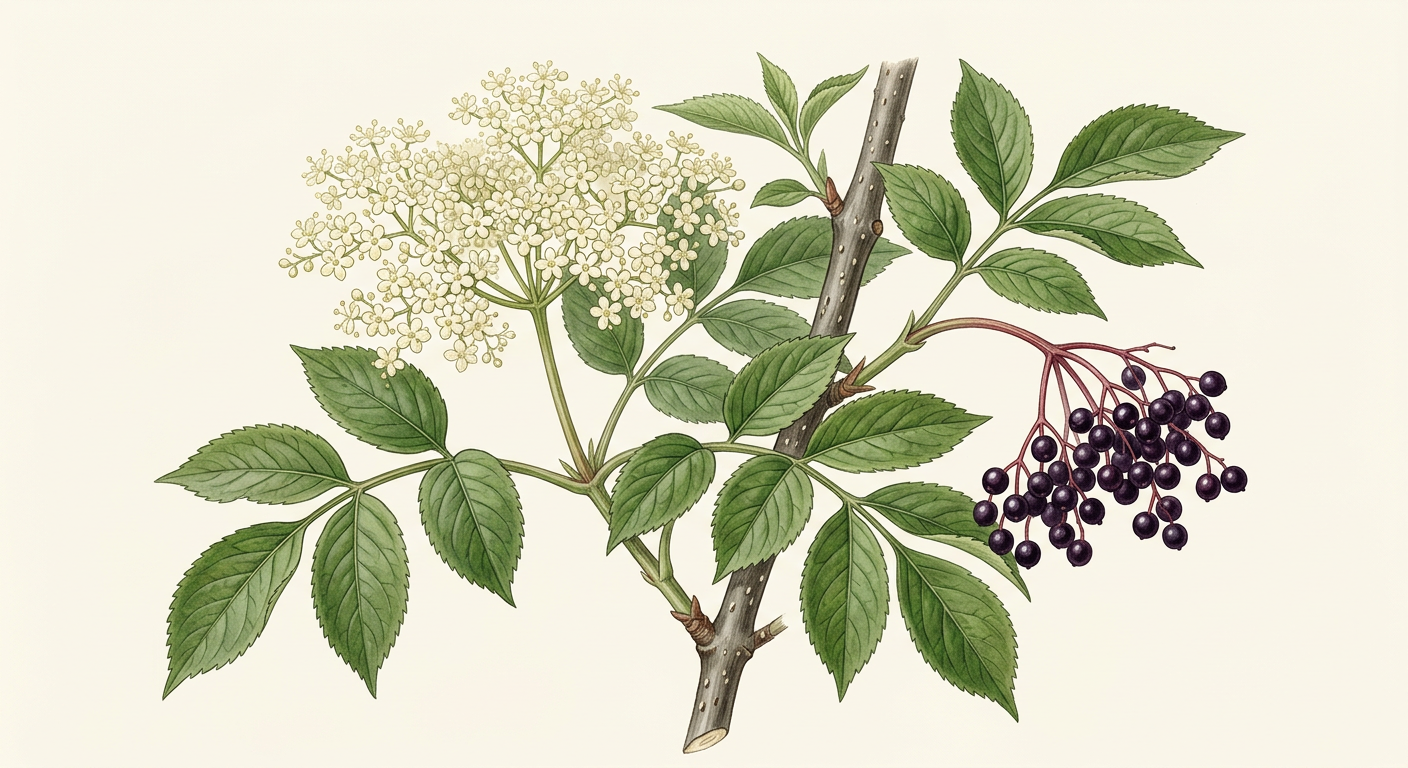
A large shrub. Ripe cooked berries and dried flowers are the culinary parts. Leaves, stems, and raw berries are not food. American elder (S. canadensis) is closely related and used similarly.
GROW → HARVEST → EAT → DRY → POWDER → CAPSULE → GUMMY — forms are not equivalent. Food first.
Identity
Also called: elder, elderflower, Sambucus canadensis (related)
What it is
A large shrub. Ripe cooked berries and dried flowers are the culinary parts. Leaves, stems, and raw berries are not food. American elder (S. canadensis) is closely related and used similarly.
From the existing encyclopedia
Elderberry is familiar in seasonal tea blends and syrup-style home recipes. Dried forms are infused or decocted; fresh berries require proper cooking when used in food.
Edible portions
- ripe cooked berries
- flowers
Absence of a portion from this list means it is not treated as food here — not that every other part is toxic.
Growing
- Climate. 3–9
- Light. Full sun to part shade
- Soil. Moist, rich, even damp
- Planting. Suckering shrub; give it room or a wet edge.
- Harvest. Flower cymes on a dry day; berries when fully dark and hanging heavy.
Processing, drying, storage
- Drying. Flowers dry well as a tea; berries are often cooked or dried fully then cooked. See also Make → Drying.
Preparation and culinary uses
- Flower fritters and cordial
- Cooked berry syrups and pies — cook the fruit
Nutrition and compounds
- Vitamins (qualitative, well-known associations). vitamin C — not milligram values.
- Plant compounds. anthocyanins. Presence is not a dose, a cure, or a reason to buy a capsule.
AAA interpretation Food first. These associations explain why a plant shows up in a nutrient conversation — they are not a supplement shopping list.
Safety
- Do not eat leaves, bark, or raw berries. Cooking ripe fruit is the traditional food path. Red-berried elder species are a different identification problem.
Next steps
Sources
- USDA PLANTS Database — taxonomy and range (verify current entries)
- USDA FoodData Central — nutrient profiles for foods (verify current entries; this page does not invent milligrams)
- State cooperative extension growing guides — verify for your region
- Integrated from the existing aaaLifetime / quantum-biohack encyclopedia corpus (unique text preserved where it was not boilerplate).
Honest incompleteness is preferred to fabricated completeness. If a section is missing, no record for it is attached here — not a claim that the plant lacks that characteristic, and not that it was omitted as a secret.
Internal quality class A. Strong page: distinctive plant facts plus practical growing or kitchen use.