Fava bean
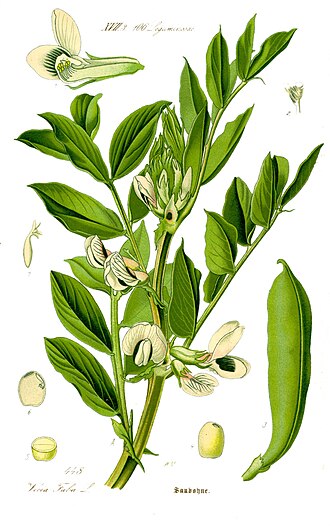
Vicia faba
A cool-season bean, not a Phaseolus. Large seeds in padded pods. Favism (G6PD deficiency) is a real food-safety issue for some people.
GROW → HARVEST → EAT → DRY → POWDER → CAPSULE → GUMMY — forms are not equivalent. Food first.
Identity
Also called: broad bean
What it is
A cool-season bean, not a Phaseolus. Large seeds in padded pods. Favism (G6PD deficiency) is a real food-safety issue for some people.
Edible portions
- immature pods (some types)
- shelled beans
- leaves in some cuisines
Absence of a portion from this list means it is not treated as food here — not that every other part is toxic.
Growing
- Climate. Cool-season; overwinters in mild climates
- Light. Full sun
- Soil. Average, well-drained
- Planting. Direct-sow early. Inoculate if new ground.
- Harvest. Pods when seeds swell but before they go starchy, or dry for storage beans.
Preparation and culinary uses
- Double-pod in some traditions; stew, puree
Nutrition and compounds
- Minerals (qualitative). iron, folate, protein — look up current USDA FoodData Central entries for numbers.
AAA interpretation Food first. These associations explain why a plant shows up in a nutrient conversation — they are not a supplement shopping list.
Safety
- People with G6PD deficiency can have a hemolytic reaction to fava beans. That is a known food-medical interaction, not folklore.
Next steps
Sources
- USDA PLANTS Database — taxonomy and range (verify current entries)
- USDA FoodData Central — nutrient profiles for foods (verify current entries; this page does not invent milligrams)
- State cooperative extension growing guides — verify for your region
Honest incompleteness is preferred to fabricated completeness. If a section is missing, no record for it is attached here — not a claim that the plant lacks that characteristic, and not that it was omitted as a secret.
Internal quality class A. Strong page: distinctive plant facts plus practical growing or kitchen use.