Echinacea
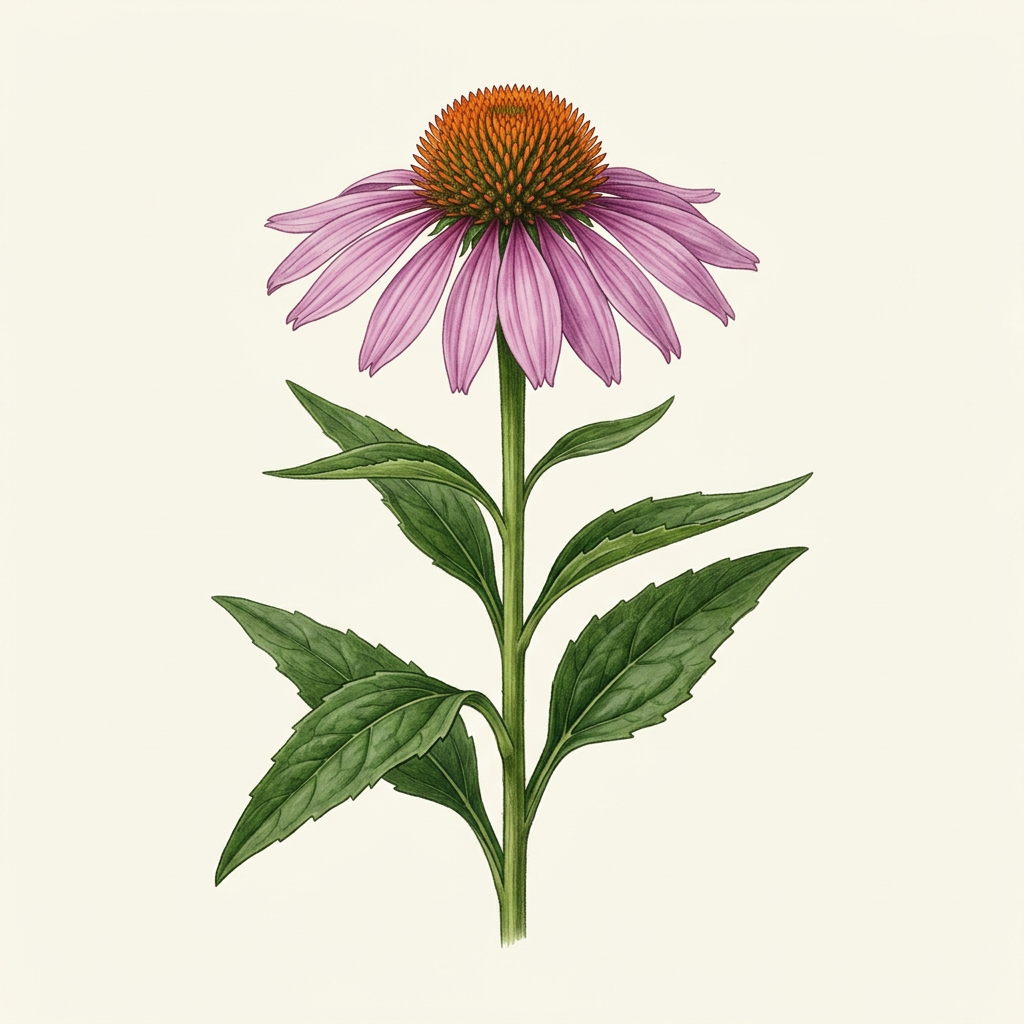
Echinacea purpurea
Purple coneflower of the prairie. Garden ornamental first. Roots and tops appear in supplement aisles; that is a processed market, not a requirement of growing the flower.
GROW → HARVEST → EAT → DRY → POWDER → CAPSULE → GUMMY — forms are not equivalent. Food first.
Identity
Also called: purple coneflower
What it is
Purple coneflower of the prairie. Garden ornamental first. Roots and tops appear in supplement aisles; that is a processed market, not a requirement of growing the flower.
From the existing encyclopedia
Echinacea is familiar in seasonal tea blends and syrup-style home recipes. Dried forms are infused or decocted; fresh berries require proper cooking when used in food. Rehydrate dried forms in warm water before adding to long braises for even texture. Complements lemon, lime, or vinegar acidity in dressings and marinades. When substituting dried Echinacea for fresh, use about one-third the volume and bloom in fat or hot water before adding acid or dairy.
Edible portions
- flower petals in tiny amounts
Absence of a portion from this list means it is not treated as food here — not that every other part is toxic.
Growing
- Climate. 3–9
- Light. Full sun
- Soil. Well-drained; too-rich soil flops the stems
- Planting. Seed (cold moist stratify) or division. Perennial.
- Harvest. Flowers for vases; roots only from mature plants if you have a reason — this site does not prescribe immune protocols.
Preparation and culinary uses
- Petals as a garnish, not an immune strategy
Traditional uses
Traditional use Some Native American medicinal traditions — traditional use, not a clinical claim
AAA interpretation Traditional use is not automatically evidence, and evidence is not automatically a shopping recommendation.
Supplement relevance
AAA interpretation Echinacea products are supplements with mixed evidence quality. Growing the plant does not obligate buying tincture.
If you are considering a bottle, use the food-first tools rather than a social-media urgency loop.
Next steps
Sources
- USDA PLANTS Database — taxonomy and range (verify current entries)
- No USDA FoodData Central nutrient profile is attached here. That is not a claim that the plant contains no nutrients.
- State cooperative extension growing guides — verify for your region
- Integrated from the existing aaaLifetime / quantum-biohack encyclopedia corpus (unique text preserved where it was not boilerplate).
Honest incompleteness is preferred to fabricated completeness. If a section is missing, no record for it is attached here — not a claim that the plant lacks that characteristic, and not that it was omitted as a secret.
Internal quality class A. Strong page: distinctive plant facts plus practical growing or kitchen use.